
What style of
chair do I have?
Chair adjustment mechanisms can be simplified into four categories.
Identify the one that best reflects how your chair adjusts.
1
Static Mechanism
Task Chair
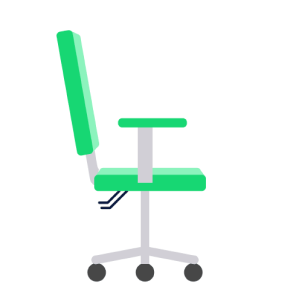
Suitable
These chairs allow you to adjust the backrest and seat separately, enabling you to find an optimal static posture. However, once adjusted, both parts are locked in place, preventing free postural movement while seated.
Static mechanisms may also
be referred to as permanent
contact or asynchronous.
2
Dynamic Mechanism Task Chair
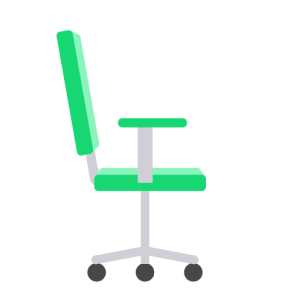
Suitable
These chairs allow the backrest and seat to move independently but in relation to each other, enabling continuous movement while seated. The mechanism moves with you, ensuring consistent back support as you shift positions.
Dynamic mechanisms may also be referred to as synchronized (synchro), free float, or self-weighting synchro.
3
Executive or
Gaming Chair
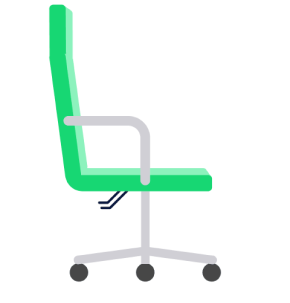
May be unsuitable
This refers to a chair style rather than a specific mechanism. In these chairs, the seat and backrest are typically a single unit and cannot be adjusted separately - they move together - generally making them less optimal.
These chairs may use mechanisms such as as knee tilt, frontal pivot, or tilt. Some gaming chairs may also incorporate static or dynamic mechanisms.
4
Non-Adjustable
Chairs
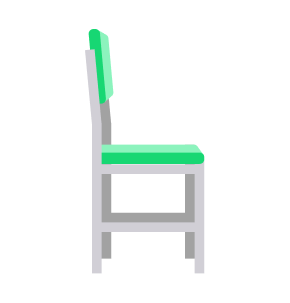
Unsuitable
These chairs have a fixed seat and backrest with no adjustments, making them unsuitable for long desk work. Without height, seat depth, or backrest changes, they cannot properly support individual posture needs.
Non-adjustable chairs can cause poor posture, discomfort, and strain due to their inability to adapt to the user's body and movement.
There’s other non-traditional ergonomic chair designs to choose from too.
In the market for a new chair? Check out