

 Listen
 Read
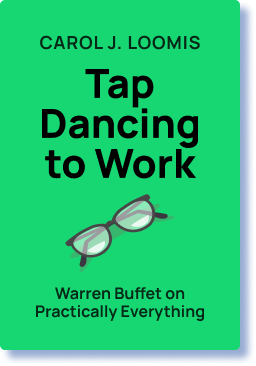
ReadWelcome to this audio summary of Tap Dancing to Work by Carol Loomis.
This book isn’t a biography. It’s a curated portrait of Warren Buffett’s thinking, told through decades of writing—his own and that of Forbes and Fortune journalist Carol Loomis, a close friend and longtime editor of Buffett’s annual shareholder letters.
Spanning nearly 50 years, Tap Dancing to Work presents Buffett not only as the world’s most successful investor, but as a thinker on business, integrity, leadership, and the long view.
Let’s explore what makes Warren Buffett such a singular figure—and what his insights can teach us about creating value, building trust, and, as he puts it, “tap dancing to work” every day.
Part 1: The Investor as Philosopher
Warren Buffett isn’t just famous for being rich—he’s famous for being consistent.
From the very beginning, Buffett rejected the idea of speculation. He followed the path set by Benjamin Graham, focusing on value investing: buying high-quality businesses at reasonable prices, and holding them for the long term.
What makes Buffett unique is that he not only applied this strategy with discipline, but articulated it with moral clarity. He believed investing is about understanding value, not betting on price movements.
In Buffett’s words: “The stock market is there to serve you, not to instruct you.”
Actionable tip: Don’t ask, “Will the price go up?” Ask, “What is this business worth—and will it still be delivering value 10 years from now?”
Part 2: Buying Businesses, Not Stocks
Buffett famously sees himself not as a stock picker, but as a business owner. Every investment he makes is evaluated as though he were buying the entire company.
That’s why he focuses on fundamentals: earnings power, competitive advantage, management quality, and long-term prospects.
He prefers businesses that are simple to understand, with predictable performance, strong brands, and moats—defensible advantages that protect them from competitors.
Coca-Cola, See’s Candies, and GEICO are all examples. These are not flashy tech bets. They are everyday businesses with durable appeal.
Buffett once said: “Our favorite holding period is forever.” He means it.
Actionable tip: Before investing in a company, ask yourself: Would I be happy owning 100% of this business and never selling? If not, why own a share of it?
Part 3: Integrity Is the Edge
One of Buffett’s most consistent themes across decades is trust.
In business and in leadership, Buffett believes reputation is everything. Berkshire Hathaway’s acquisition strategy is built not just on numbers, but on relationships. He often closes multimillion-dollar deals with a handshake and a promise—because he only works with people he respects.
Buffett’s rule for hiring? “Somebody once said that in looking for people to hire, you look for three qualities: integrity, intelligence, and energy. And if you don’t have the first, the other two will kill you.”
Actionable tip: In business, judge partners not only by talent, but by character. A brilliant but untrustworthy person is a liability, not an asset.
Part 4: The Berkshire Model – Decentralisation and Discipline
Tap Dancing to Work shows how Berkshire Hathaway’s structure defies conventional management norms.
It’s a vast conglomerate, owning over 60 operating businesses, yet it is managed with minimal bureaucracy. Buffett does not micromanage. He empowers CEOs to run their companies with autonomy—so long as they uphold Berkshire’s values.
He avoids synergy-driven mergers, corporate restructuring fads, and financial engineering. Instead, he emphasises capital discipline, low debt, and operating independence.
The result? A lean, decentralised empire based on trust, clarity, and stewardship.
Actionable tip: If you lead people, create clear principles—and then get out of their way. Hire well, set expectations, and let them do what they do best.
Part 5: Market Crises – Be Greedy When Others Are Fearful
Buffett’s calmness during financial storms is legendary.
Whether it was Black Monday in 1987, the dot-com crash, or the 2008 financial crisis, Buffett always applied the same principle: “Be fearful when others are greedy, and greedy when others are fearful.”
When markets panic, Buffett looks for opportunities. In 2008, as others pulled back, he invested billions in companies like Goldman Sachs and General Electric—often on highly favourable terms.
But this contrarian stance isn’t just instinct. It’s rooted in liquidity, patience, and courage. Buffett keeps reserves so he can move quickly—and thinks decades ahead, not months.
Actionable tip: Build reserves—not just of money, but of courage and clarity. When fear spreads, don’t join the herd. Look for value others are too scared to see.
Part 6: Simplicity Over Complexity
One of Buffett’s defining traits is his preference for simplicity.
He avoids complicated financial instruments he doesn’t fully understand. He never chased dot-coms or cryptocurrencies. Instead, he buys businesses whose models are easy to explain to a child—and sticks to his circle of competence.
Buffett sees clarity as a competitive advantage. While Wall Street obsesses over quarterly guidance, he focuses on underlying business performance. While others overcomplicate, he reads annual reports and drinks Cherry Coke.
Actionable tip: Simplify your decision-making. If you can’t explain why something’s valuable in plain English, you may not understand it deeply enough.
Part 7: The Joy of Work
The title Tap Dancing to Work comes from a phrase Buffett often uses to describe his life. He says he “tap dances to work” every day—because he gets to do what he loves, with people he admires, on his own terms.
This joy isn’t an accident. It’s the result of intentional alignment between values, interests, and lifestyle.
Buffett lives in Omaha, not Wall Street. He reads for hours every day, avoids unnecessary meetings, and plays bridge regularly. His wealth allows freedom—but it’s his choices that bring joy.
Actionable tip: Ask yourself: What would make me tap dance to work? And what’s stopping me from creating that alignment today?
Conclusion: Wisdom Over Hype
Tap Dancing to Work reminds us that Warren Buffett’s genius isn’t just in stock picking.
It’s in clarity, patience, integrity, and long-term thinking.
His approach is slow, thoughtful, and often unfashionable. But over time, it has produced extraordinary results—not just financially, but ethically.
Let’s recap:
· Invest in businesses, not tickers.
· Trust character over charisma.
· Keep it simple.
· Think decades ahead.
· Use fear as a signal to look more closely.
· Work with people you admire.
· And above all, align your work with your values.
Buffett once said: “The difference between successful people and really successful people is that really successful people say no to almost everything.”
That clarity—and the joy it brings—is what makes him tap dance to work.